The Art of Material Definition: Crafting Believable Surfaces in 3D
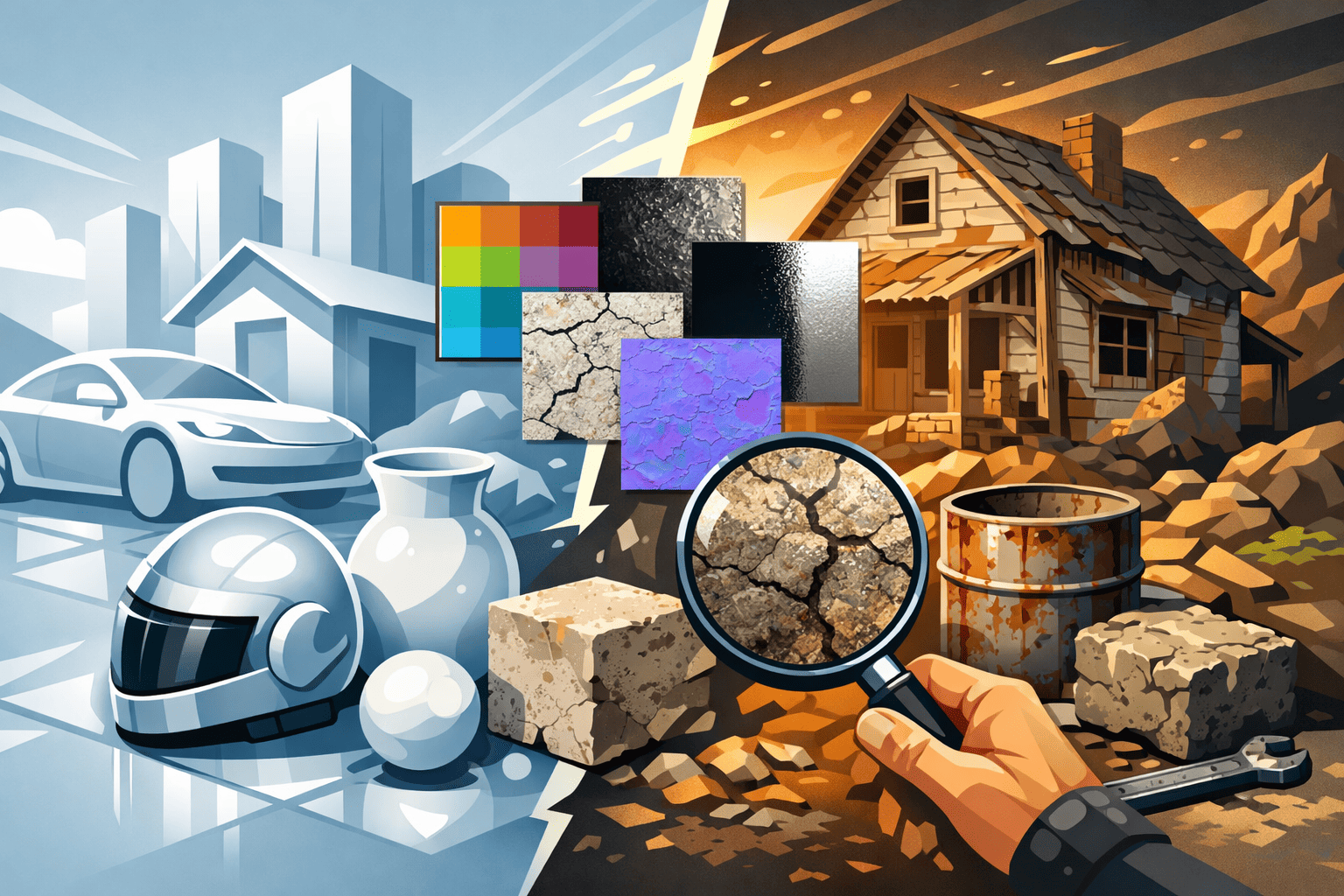
The Art of Material Definition: Crafting Believable Surfaces in 3D
In the realm of 3D visualization, the difference between a compelling scene and an unconvincing one often lies not in the geometric complexity of models, but in the fidelity of their surfaces. Artists and designers frequently encounter a frustrating paradox: meticulously crafted models can still appear artificial or 'plastic' when rendered. This disconnect diminishes immersion and can undermine the perceived value of the entire project, leaving viewers feeling detached from the digital world presented.
The core of this issue stems from an underestimation of material definition. Many projects fall short because materials are treated as mere color applications rather than intricate layers of physical properties. Without a deep understanding of how light interacts with various substances – from rough concrete to polished metal or delicate skin – the resulting visuals will lack the subtle nuances that trick the eye into believing what it sees. This oversight can lead to generic-looking assets that fail to convey age, wear, or true physical presence.
One significant symptom of this problem is the prevalence of 'perfect' surfaces that lack character. Real-world objects are rarely pristine; they bear the marks of time, environment, and interaction. Digital materials that do not reflect these imperfections, such as subtle scratches, dust accumulation, or variations in sheen, inadvertently broadcast their artificiality. This absence of authentic detail prevents models from truly anchoring themselves within a believable visual narrative, hindering the emotional connection with the audience.
Furthermore, the rapid evolution of rendering technologies has raised audience expectations. Viewers, accustomed to photorealistic visual effects in media, are increasingly discerning. A superficial approach to material definition, which might have been acceptable years ago, now stands out as a glaring deficiency. This escalating standard means that relying on default settings or simplistic textures is no longer sufficient to achieve competitive visual quality, pushing the need for advanced material artistry to the forefront of 3D production pipelines.
Ultimately, the challenge extends beyond aesthetics; it impacts the clarity of communication. A poorly defined material can obscure the intended function or history of an object. Is that surface supposed to be ancient stone or newly cast concrete? Is it soft fabric or stiff leather? When materials fail to communicate these fundamental attributes effectively, the narrative integrity of the 3D environment suffers, leading to confusion and a diminished overall impact for any visualization endeavor.
Common Hurdles in Material Definition
- Insufficient Observational Practice: A lack of careful study of real-world materials under various lighting conditions. Many artists rely too heavily on memory or generic textures, rather than analyzing how different surfaces reflect and absorb light, which leads to a flat and unconvincing appearance in digital renders.
- Misunderstanding PBR Principles: The failure to grasp the fundamental concepts of Physically Based Rendering (PBR) workflows. Without a solid understanding of maps like albedo, roughness, metallic, and normal, artists often misuse or incorrectly combine them, resulting in materials that defy physical logic and appear artificial.
- Over-reliance on Presets: Excessive dependence on out-of-the-box material presets without customization or adaptation to specific scene requirements. While a good starting point, these often lack the unique imperfections and subtle variations necessary to make a digital object truly feel integrated and authentic within a scene.
Pathways to Authentic Surfaces
1. Mastering Physically Based Rendering (PBR) Workflows
One of the most impactful solutions is a thorough immersion in PBR principles. PBR is not just a trend; it's a methodology that accurately simulates how light behaves in the physical world. This approach ensures that materials react correctly to light sources, regardless of the rendering environment. It involves understanding the interplay of various texture maps such as albedo (base color), roughness, metallic, normal, and ambient occlusion, each contributing to a material's unique visual signature.
To implement this effectively, artists should invest time in understanding the *science* behind each PBR map. For instance, the roughness map dictates how scattered or focused light reflections are, directly influencing whether a surface appears dull or shiny. The metallic map defines which parts of a surface behave like a metal (reflecting light with tinted specular) versus a dielectric (reflecting white specular). A deep dive into these concepts, perhaps through Blenza Reference Library's educational resources, can transform material quality.
Practical application involves creating or acquiring high-quality PBR textures that are specifically designed to work within this framework. This means moving beyond simple diffuse textures and embracing the full suite of PBR maps. The precision with which these maps are authored or selected directly correlates with the realism achieved. Consistent adherence to PBR guidelines ensures materials maintain their physical integrity across diverse lighting scenarios, making them inherently more believable.
Furthermore, understanding the nuances of how different PBR pipelines (e.g., metallic-roughness vs. specular-glossiness) interpret these maps is crucial. While the core principles remain, the specific values and channels can vary. Being adept at translating between these systems ensures flexibility and consistency across different software and rendering engines. This technical proficiency is a cornerstone for crafting truly authentic digital surfaces.
Ultimately, a strong PBR foundation empowers artists to predict and control how their materials will look under any conditions, moving beyond guesswork to informed creation. This predictive capability is vital for achieving consistent, high-quality results across an entire project, ensuring that every surface contributes positively to the overall visual coherence and realism of the 3D environment.
2. Cultivating a Reference-Driven Approach
The second crucial solution involves adopting a rigorous reference-driven workflow. The real world is the ultimate library of materials, offering an endless array of textures, imperfections, and surface characteristics. Instead of guessing how a material should look, artists should actively seek out and analyze photographic references of actual objects under various lighting conditions. This practice trains the eye to recognize subtle details that are often overlooked but are vital for realism.
This approach begins with meticulous observation. When defining a material like aged wood, for example, gather multiple images of aged wood: wet, dry, under direct light, in shadow, close-up, and from a distance. Pay attention to how light catches the grain, where wear and tear accumulate, and the subtle color shifts. This detailed analysis forms the blueprint for your digital material, ensuring that it accurately reflects the complexities found in reality, rather than a generalized interpretation.
Building a personal reference library is an invaluable asset. Categorize and tag images for quick access, focusing on specific material types, environmental wear, and lighting scenarios. This curated collection serves as a constant source of inspiration and accuracy, reducing reliance on generic stock textures and fostering a deeper understanding of material properties. Blenza Reference Library can be an excellent resource for organizing and accessing such valuable visual data.
Beyond static images, consider video references or even physical samples when possible. Observing how light moves across a real surface as it's rotated or as lighting changes provides dynamic insights that static photos might miss. This deeper understanding of light interaction is particularly important for highly reflective or translucent materials, where subtle shifts in reflection and refraction play a significant role in their believability.
Integrating reference analysis into every stage of material creation, from initial concept to final tweaks, ensures authenticity. It's an iterative process of comparing your digital material against its real-world counterpart, identifying discrepancies, and refining until the visual fidelity is achieved. This systematic comparison is key to elevating materials from merely acceptable to truly convincing and immersive.
3. Embracing Advanced Texturing Tools and Iteration
The third solution lies in leveraging modern texturing software and adopting an iterative, non-destructive workflow. Tools like Substance Painter, Substance Designer, and Quixel Mixer have revolutionized material creation, offering powerful procedural and hand-painting capabilities that allow for intricate detail and rapid iteration. These applications enable artists to build complex material layers, generate PBR maps with precision, and experiment freely without committing to destructive changes.
Learning to master these tools is paramount. They provide functionalities such as smart masks, generators, and filters that can quickly add realistic wear, dirt, rust, or other environmental effects based on the model's geometry. This procedural generation saves immense time while ensuring a level of detail and consistency that would be challenging to achieve manually. Proficiency in these systems allows for dynamic material responses that enhance realism significantly.
An iterative workflow is equally important. This means constantly testing materials in your target rendering engine, observing how they behave under different lighting conditions, and making adjustments. It's a cycle of creation, testing, feedback, and refinement. Modern tools facilitate this by allowing quick export and re-import of textures, making the process of tweaking roughness values or adjusting normal map intensity efficient and streamlined.
Furthermore, understanding how to bake high-polygon details into low-polygon models through normal maps is a foundational skill. This technique allows for incredibly detailed surfaces without the performance overhead of dense geometry. Combined with displacement and height maps, artists can create surfaces with profound tactile qualities, making objects feel physically present and grounded within the 3D scene.
Finally, embracing non-destructive workflows within these tools means that every adjustment is a layer or parameter that can be modified at any time. This flexibility is invaluable for client revisions, artistic changes, or adapting assets for different projects. It transforms material creation from a linear process into a dynamic, adaptable art form, ensuring that the final output is always of the highest possible visual quality.
Potential Considerations and Safeguards
- Over-analysis Paralysis: The risk of getting bogged down in excessive detail, leading to prolonged production times. Recommendation: Establish clear visual goals early and use reference as a guide, not an absolute mandate. Focus on impactful details first, then refine.
- Technical Overwhelm: The steep learning curve associated with advanced PBR concepts and sophisticated texturing software. Recommendation: Start with foundational PBR principles and gradually integrate new tools. Utilize Blenza Reference Library's structured tutorials for a guided learning path.
- Artistic Vision Compromise: Focusing too much on technical realism can sometimes overshadow artistic intent or stylistic choices. Recommendation: Always balance technical accuracy with the overarching artistic vision. Realism serves the art; the art should not be subservient to realism.
Comments
The points about 'over-analysis paralysis' and 'technical overwhelm' resonate deeply. It's a real challenge to balance the pursuit of realism with practical project timelines. Good advice on managing these risks.
I found the article to be well-structured and easy to follow. The solutions provided are practical, though some might require significant time investment for mastery. A solid introduction to the topic.
Thank you for the positive feedback! We designed this guide to be both informative and practical. The journey to mastery certainly requires dedication, but the results in visual quality are truly rewarding.
We understand these challenges are common in 3D production. Our goal is to provide strategies that help artists navigate these complexities effectively, ensuring both quality and efficiency. Your insights are valuable!
Related Posts
This article offers a clear, actionable breakdown of material definition. I particularly appreciate the emphasis on PBR and reference-driven workflows. Very helpful for artists looking to elevate their work.